When purchasing steel for outdoor structures, many buyers initially focus on the price per ton. However, the initial material cost represents only part of the total expenditure over a product's service life.
Corrosion-related maintenance, replacement work, transportation, installation, and production efficiency can all influence the final project cost.
For manufacturers and contractors working on photovoltaic mounting systems, industrial buildings, agricultural structures, and outdoor support frames, choosing an appropriate coated steel can help balance initial investment and long-term performance.
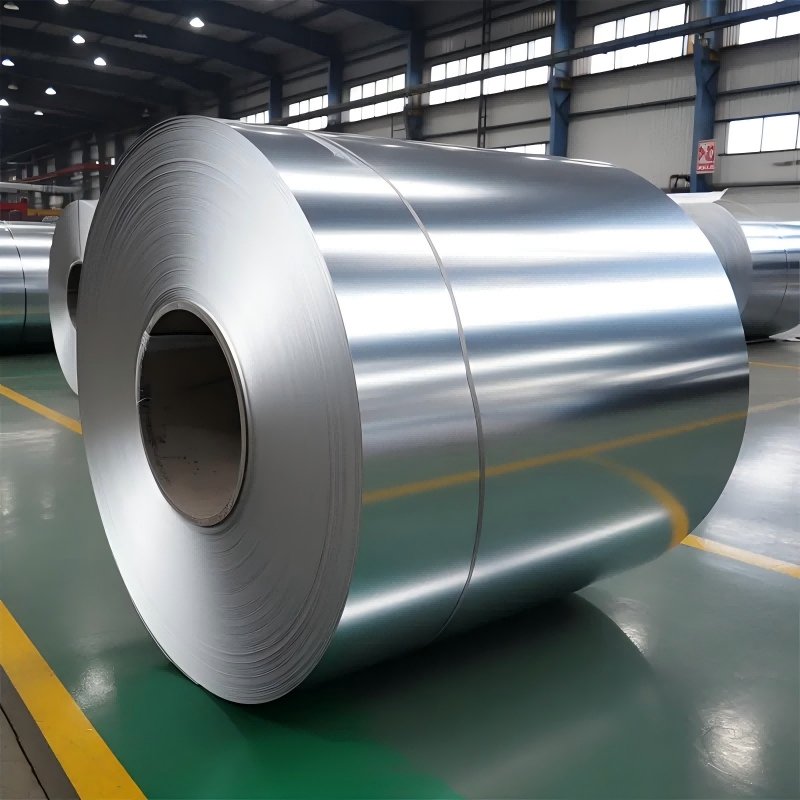
S250GD+ZM Zn-Al-Mg coated steel is one option worth evaluating when structural performance and corrosion protection are important purchasing considerations.
Two steel materials may have different purchase prices but lead to different costs after installation.
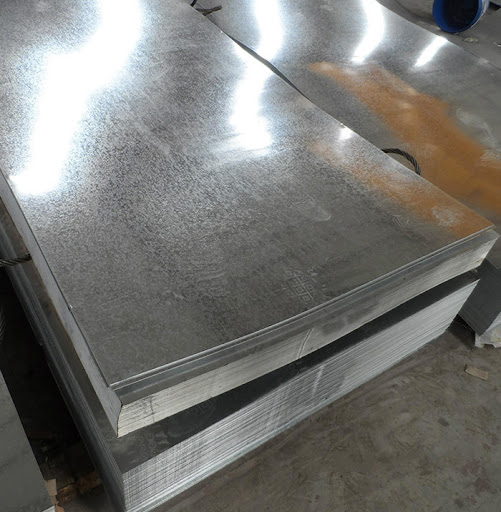
For example, conventional galvanized steel may offer an economical initial solution for projects in relatively mild atmospheric environments. However, in more corrosive locations, the coating system and maintenance strategy may require additional consideration.
If corrosion develops around cut edges, drilled holes, or damaged surfaces, repair work may become necessary.
Maintenance activities can involve labor, access equipment, temporary shutdowns, replacement components, and transportation.
For large solar farms or industrial installations, even relatively small maintenance requirements can become expensive when repeated across thousands of components.
Therefore, procurement decisions should consider the expected service conditions rather than comparing steel prices alone.
A practical lifecycle cost assessment should include several categories.
|
Cost category |
Main factors |
Potential impact |
|---|---|---|
|
Initial material cost |
Steel grade and coating mass |
Purchase budget |
|
Processing cost |
Cutting, punching, bending, forming |
Manufacturing efficiency |
|
Installation cost |
Weight, connections, assembly |
Project labor |
|
Maintenance cost |
Inspection and corrosion repair |
Long-term expenditure |
|
Replacement cost |
Component failure and downtime |
Operational reliability |
|
Logistics cost |
Packaging, transport, storage |
Delivery expenses |
This approach provides a more complete picture of the financial impact of material selection.
For instance, a steel coil with a higher initial price may still be economically attractive if it reduces maintenance requirements and provides more reliable performance in the intended environment.
However, such savings should be demonstrated through project-specific assumptions rather than general claims.
Zn-Al-Mg coated steel combines zinc, aluminum, and magnesium in its metallic coating system.
Its corrosion behavior can provide advantages in applications where conventional zinc-coated steel may require additional evaluation.
One particularly important characteristic is its performance around cut edges. During exposure, protective corrosion products can form near exposed steel and help reduce corrosion progression.
This is relevant to fabricated components because many outdoor structures contain numerous cut edges, punched holes, and connection points.
Commercial technical information from steel manufacturers also identifies improved cut-edge protection, forming suitability, and corrosion performance as important reasons for evaluating Zn-Al-Mg coatings in photovoltaic applications.
Nevertheless, Zn-Al-Mg steel is not automatically the most economical option for every application.
For structures in mild environments with straightforward maintenance access, conventional galvanized steel may remain a suitable choice.
The decision should be based on the actual corrosion exposure, coating specification, expected maintenance strategy, and total project budget.
Another important factor is the relationship between steel strength and structural design.
S250GD+ZM provides a minimum yield strength of 250 MPa under the relevant EN 10346 designation.
For manufacturers of cold-formed components, material strength influences the design of the cross-section, thickness, connections, and load-bearing capacity.
A properly engineered structural profile may achieve the required performance without unnecessary material consumption.
However, reducing thickness simply because a higher-strength material is selected is not always appropriate.
Engineers must evaluate:
Dead loads and imposed loads.
Wind and snow loading.
Span and support spacing.
Local buckling and section stability.
Connection strength and fastener performance.
Deflection and deformation limits.
For solar mounting systems, these calculations are particularly important because the support structure must withstand environmental loads throughout its intended service period.
The coating system and structural design should therefore be evaluated as two connected but separate aspects of project performance.
Before choosing between different coated steels, buyers can use a project comparison framework.
|
Comparison factor |
Conventional GI steel |
S250GD+ZM |
|---|---|---|
|
Initial purchase price |
Often competitive |
Depends on coating specification |
|
Corrosion protection |
Established zinc protection |
Enhanced protection potential |
|
Cut-edge performance |
Requires appropriate consideration |
Improved protection potential |
|
Processing |
Widely used |
Suitable for appropriate forming processes |
|
Maintenance planning |
Based on exposure conditions |
Based on exposure conditions and coating performance |
A meaningful comparison should use equivalent steel dimensions, comparable structural requirements, and appropriate coating specifications.
For a more accurate calculation, buyers can estimate:
Total lifecycle cost = Initial material cost + Processing cost + Installation cost + Maintenance cost + Replacement cost.
The calculation should cover the same evaluation period for each material option.
For projects with long operating periods, engineers may also consider discount rates and the present value of future maintenance expenses.
Before placing an order, project owners and steel processors should clarify several points.
What is the atmospheric corrosion category of the installation location?
What coating mass is required by the engineering specification?
Will the material undergo extensive cutting, punching, or roll forming?
What are the expected structural loads and dimensional requirements?
What inspection, maintenance, and replacement strategy will be used?
These questions help buyers avoid selecting materials solely on the basis of a product label or supplier quotation.
They also make it easier to compare different suppliers on a consistent technical basis.
GNEE STEEL supplies Zn-Al-Mg coated steel coils for international steel distributors, component manufacturers, and engineering projects.
Our product range includes structural grades such as S250GD+ZM and other Zn-Al-Mg coated steel grades for different manufacturing requirements.
In addition to coil supply, we support customized processing, including slitting, cutting, punching, bending, and the production of steel profiles and fabricated components.
For buyers developing solar mounting structures, industrial support systems, or outdoor steel products, we can discuss material specifications and processing solutions based on actual project requirements.
Contact GNEE STEEL for S250GD+ZM Zn-Al-Mg steel coil quotations, technical specifications, and customized steel processing solutions.