Cut-edge corrosion is an important consideration when manufacturing components from coated steel. During slitting, shearing, punching, or laser cutting, the original metallic coating is removed from the cut surface, exposing the underlying steel substrate.
For manufacturers using S250GD+ZM Zn-Al-Mg coated steel, understanding how cut edges behave during outdoor exposure can help improve product durability, fabrication quality, and customer satisfaction.
Unlike ordinary steel processing, coated steel fabrication requires manufacturers to consider both the mechanical quality of the finished component and the continuity of its corrosion protection.
Metallic coated steel obtains its corrosion protection from a coating layer applied to the steel substrate. When the material is cut, the newly exposed cross-section contains uncoated steel.
Several factors can influence the corrosion behavior of this area:
Cutting method: Different cutting methods produce different edge geometries, heat effects, and surface conditions.
Coating thickness: The amount and distribution of coating material influence the available corrosion protection.
Environmental exposure: Salt, moisture, industrial pollutants, and condensation may accelerate corrosion around exposed edges.
Component design: Narrow gaps, overlapping surfaces, and water-retaining geometries can create conditions that promote localized corrosion.
For products such as solar mounting channels, structural brackets, and outdoor support profiles, these details can influence long-term performance.
One reason manufacturers consider Zn-Al-Mg coated steel is its corrosion behavior around exposed steel edges.
The zinc component provides sacrificial protection, while aluminum and magnesium contribute to the formation of protective corrosion products. Under suitable exposure conditions, these products can spread around the exposed edge and help slow corrosion.
Research published in Corrosion Science investigated the cut-edge corrosion behavior of Zn-Al-Mg coated steel. It found that protective corrosion products developed near the simulated cut edge and helped suppress further corrosion reactions.
This behavior is often described commercially as self-healing or cut-edge protection.
However, the term should be understood correctly. It does not mean that the coating physically repairs itself or restores the original coating thickness. Rather, corrosion products generated from the coating can provide additional protection around exposed areas.
The degree of protection depends on coating composition, coating mass, exposure conditions, and component design.
Choosing a suitable coating is only one part of the solution. Manufacturing processes also influence edge quality.
|
Fabrication process |
Potential issue |
Recommended control |
|---|---|---|
|
Slitting |
Burrs and uneven edges |
Maintain sharp, properly aligned blades |
|
Shearing |
Edge deformation |
Control blade clearance |
|
Punching |
Burr formation and coating damage |
Optimize punch and die conditions |
|
Laser cutting |
Heat-affected areas and oxide formation |
Optimize cutting parameters |
|
Drilling |
Localized coating removal |
Remove debris and inspect holes |
For manufacturers producing S250GD+ZM components, tooling maintenance is particularly important.
Worn cutting blades may generate excessive burrs or deform the edge. Poorly adjusted punching tools can cause dimensional deviations and unnecessary coating damage.
Laser cutting requires special attention because heat input may influence the surrounding coating. Cutting parameters should be optimized according to material thickness and equipment capability.
Not every component requires additional treatment after cutting. The decision should depend on the project specification and actual exposure conditions.
For components used in ordinary atmospheric environments, the inherent cut-edge protection of an appropriate Zn-Al-Mg coating may be sufficient for the intended application.
However, additional protection may be considered for:
Structures located close to seawater.
Components exposed to aggressive industrial chemicals.
Deep scratches or heavily damaged coating areas.
Areas with persistent moisture accumulation.
Critical connection points requiring additional protection.
Possible measures include compatible zinc-rich repair coatings or other protective treatments approved for the application.
Before applying additional coatings, manufacturers should verify compatibility, surface preparation requirements, and adhesion performance. Unnecessary treatment may increase production costs without providing meaningful benefits.
A good corrosion-control strategy begins before fabrication.
Engineers should avoid designs that allow rainwater to accumulate inside channels or around connection points. Drainage holes, appropriate clearances, and accessible inspection areas can help reduce moisture retention.
The design should also minimize unnecessary overlapping surfaces where water and contaminants may become trapped.
For bolted connections, attention should be given to contact surfaces, fastener materials, and the compatibility of different metals. Galvanic corrosion may become a concern when dissimilar metals are exposed to an electrolyte.
In addition, cut-edge protection should not replace proper coating selection or environmental assessment. For demanding projects, accelerated corrosion testing and field exposure data can provide more useful information than general product descriptions.
Manufacturers should establish inspection procedures covering both incoming coils and finished components.
Incoming material inspection can include thickness measurement, coating designation verification, surface inspection, and certificate review.
During fabrication, operators should monitor cutting quality, burr height, dimensional accuracy, and visible coating damage.
Finished products should be checked for sharp edges, deformation, contamination, and packaging-related scratches.
Salt spray testing may be useful for comparative evaluation, but its results should not be directly converted into years of outdoor service life. Actual durability depends on the complete exposure environment and component design.
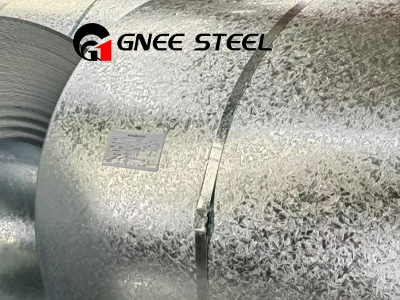
GNEE STEEL provides Zn-Al-Mg coated steel coils, including S250GD+ZM, for customers producing structural and industrial components.
We understand that steel buyers are not simply purchasing a coating designation. They need material that can be processed consistently into finished products.
Our services can support coil slitting, cutting, punching, bending, roll forming, and customized fabrication according to customer drawings and project requirements.
If you are manufacturing solar mounting channels, structural brackets, or outdoor steel components, send us your material specifications and processing requirements.
Contact GNEE STEEL to discuss S250GD+ZM Zn-Al-Mg steel coils and customized fabrication solutions for your next project.