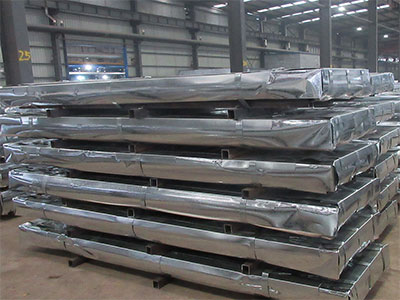
Photovoltaic (PV) brackets are specialized structures designed for the placement, installation, and fixation of solar panels, also known as solar mounting systems. As the "backbone" of a PV power station, PV brackets enable flexible adjustment of power station construction according to terrain, solar irradiance, and other factors. A scientifically sound PV bracket system not only extends the service life of the PV power station but also significantly improves power generation efficiency.
PV brackets are generally categorized into three main types: fixed brackets, tracking brackets, and flexible brackets.
As the name suggests, fixed PV brackets are mounting systems where the position, angle, and orientation remain unchanged after installation. This installation method directly orients solar PV components toward low-latitude regions (at a certain angle to the ground) and arranges them in series and parallel to form a solar PV array for power generation. Fixed brackets offer multiple installation solutions: ground-mounted options include pile foundation, concrete ballast, embedded parts, and ground anchor methods, while rooftop solutions are tailored to different roofing materials.
Rooftop PV brackets are installed on sloped or flat rooftops. During installation, they must conform to the rooftop environment without damaging the original structure or waterproof system. Common roofing materials include glazed tiles, color steel tiles, asphalt shingles, and concrete surfaces, with customized bracket solutions designed for each material.
Rooftops are divided into sloped and flat types. For sloped rooftops, brackets are typically laid flat along the roof slope, though angled installation is also possible (a more complex method with fewer applications). For flat rooftops, both flat-laid and angled installation options are available.
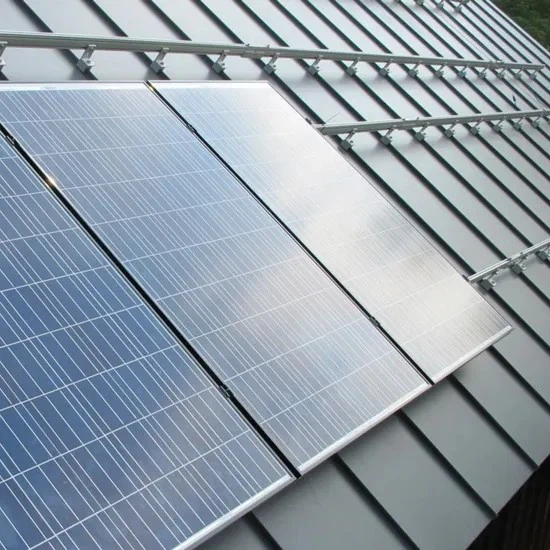
Rooftop PV Brackets
Ground-mounted PV brackets are installed on open outdoor ground. For large-scale ground PV systems, bracket fixation methods vary based on geology, environment, climate, and other conditions. Common solutions include concrete strip (block) foundations, pile foundations, ground anchors, and screw piles.
Agrivoltaics and Husbandry-PV Integration: This model features an open PV power station on the upper level and space for planting Chinese medicinal herbs or raising livestock below, maximizing land resource utilization and creating a perfect combination of modern agriculture and new energy.
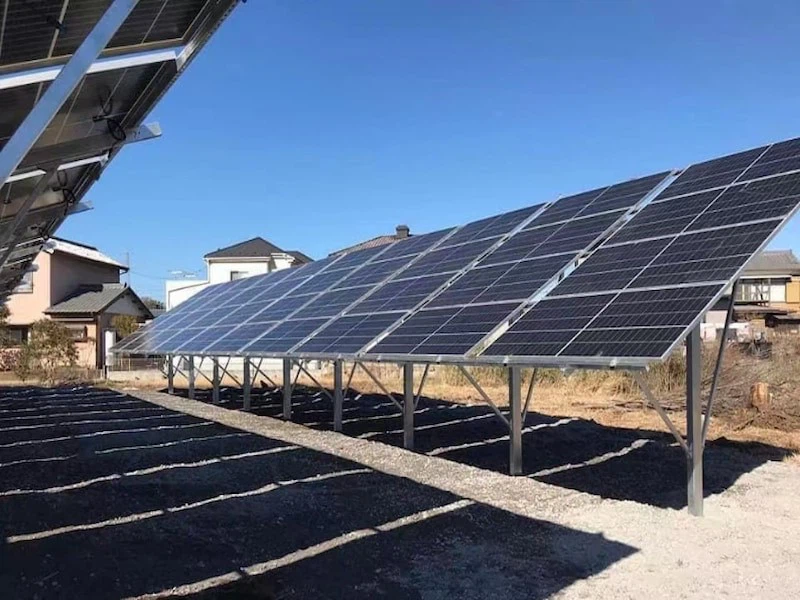
Ground-Mounted PV Brackets
Fishery-PV Integration: This model enables power generation above water and fish farming below, creating an intensive development model of "one resource, two industries". It improves resource utilization, protects the ecological environment, enhances water resource utilization efficiency, and offers ecological, energy-saving, and tourism benefits.
Floating PV Brackets: Floating systems eliminate extensive civil work and shorten installation cycles. They float directly on the water surface, eliminating costs for site leveling, cable trench excavation, and other foundation works. The water body provides a cooling effect, and efficient utilization of solar resources can increase power generation of floating PV stations by at least 15%, accelerating investment return.

Floating/Water-Based PV Brackets
Tracking brackets are divided into fixed adjustable PV brackets and automatic tracking PV brackets.
Fixed adjustable brackets are built on fixed systems, allowing angle adjustment according to different months or seasons to boost power generation. The mainstream fixed adjustable PV brackets include:
Large arc adjustable brackets
Jack-type adjustable brackets
Track jack-type adjustable brackets
Single-axis tracking brackets follow the sun's trajectory in the east-west direction, delivering a significant increase in power generation. However, since single-axis brackets have no tilt toward the south, their radiation reception capacity is poor at low solar altitude angles, a disadvantage particularly noticeable in high-latitude regions. In high-latitude areas, the power generation improvement of single-axis brackets decreases, and in winter, power generation may even be lower than that of fixed brackets.
Based on component arrangement, single-axis tracking is divided into single-row (1P) and double-row (2P) single-axis systems: 1P refers to 1 component arranged along the bracket width direction, while 2P refers to 2 components.
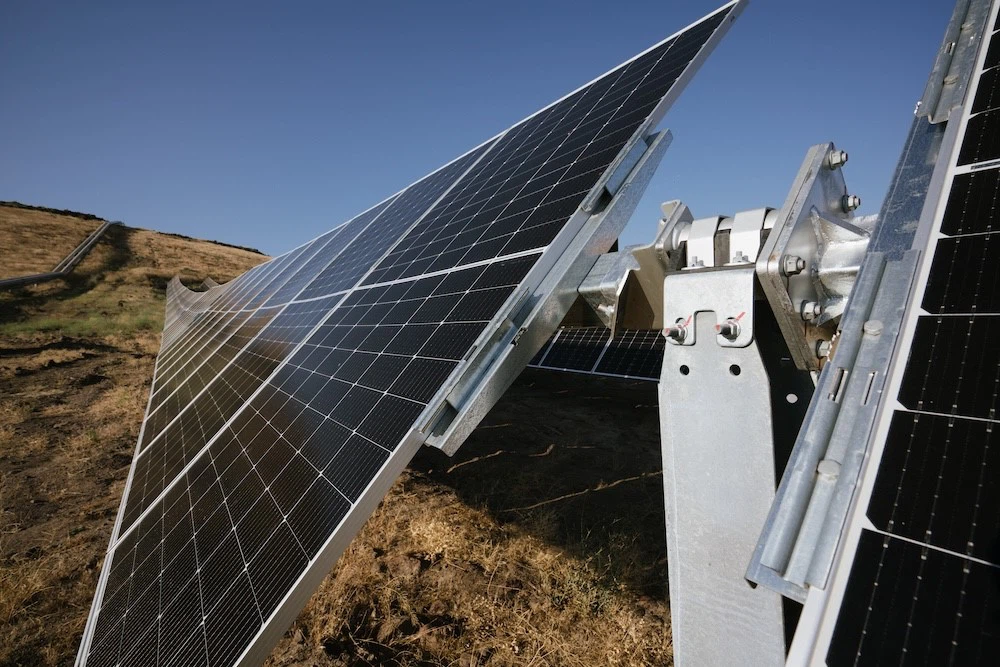
Single-Axis Tracking
Tilted single-axis brackets have a certain tilt toward the south, offering better performance than standard single-axis systems. However, they have their own limitations: the southward tilt means the north side of the bracket gets higher from the ground as the rotating shaft lengthens. Since rear columns cannot be excessively tall, the rotating shaft of tilted single-axis brackets cannot be as long as that of flat single-axis systems, requiring independent units that increase cost and land occupation.
Based on the number of columns, tilted single-axis brackets are divided into single-column, double-column, and multi-column tilted single-axis systems.
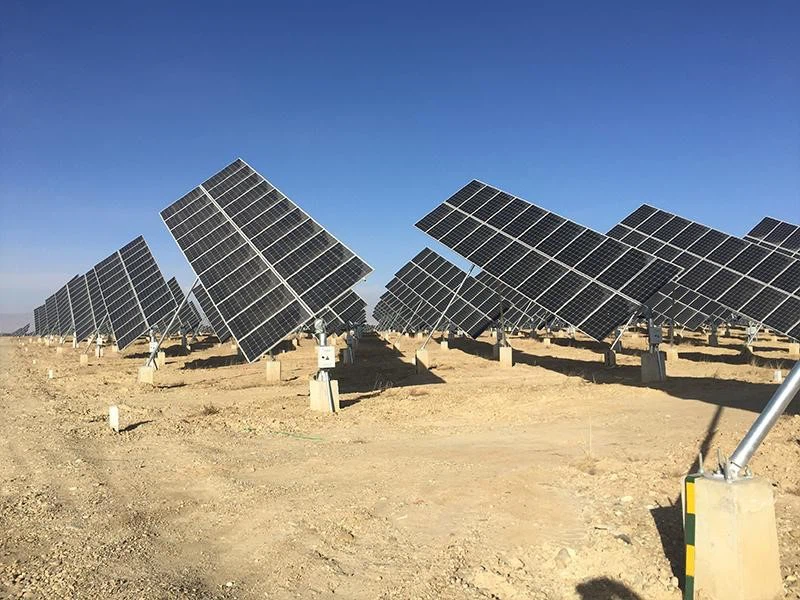
Tilted Single-Axis Configuration
Dual-axis tracking brackets use two rotating shafts (vertical and horizontal) for real-time tracking of sunlight. The PV array moves along two rotating axes, tracking both the sun's azimuth and altitude angles to ensure sunlight is perpendicular to the component surface at all times, maximizing power generation. This system is suitable for use in all latitude regions.
In terms of technical routes, flexible PV brackets are roughly divided into single-layer suspension cable systems, double-layer systems (load-bearing + stabilizing cables), and more complex reverse tension wind-resistant network structures. Common types include prestressed cable networks, hybrid systems, and tension string (beam) truss structures, all containing key components such as load-bearing and stabilizing cables, anchor cables, cable-stayed supports, piles, anchor systems, steel beams, and cable-stayed bearing columns.
Cable structure flexible PV bracket systems feature 3-15m high headroom and 10-60m large-span characteristics, effectively adapting to complex mountain terrain and avoiding unfavorable factors such as undulating mountains and numerous slopes. Meanwhile, they fully release the space under the brackets, enabling agrivoltaics and forestry-PV integration, improving power generation of PV stations, and maximizing land and space utilization efficiency.
Flexible brackets use less steel, so they are generally considered lower cost in the industry. However, as flexible brackets are still in the stage of gradual technical improvement and industry standard revision, there is a wide variety of flexible bracket types on the market with uneven quality, leading to large price fluctuations. The cost per unit length and headroom of flexible bracket systems ranges from 0.2 yuan/w to 0.6 yuan/w, which is a direct factor making enterprises more cautious in this regard. In terms of structural design, reasonable margins and exploration of redundant design will increase. It is indicated that with the further maturity of technology, the application of flexible brackets will be gradually standardized, products will be more reliable, and costs will be more reasonable.