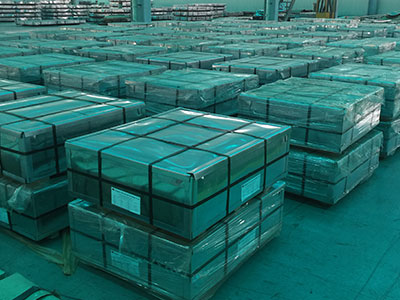
Galvalume steel coil is a hot-dip coated steel with a
55% aluminum, 43.4% zinc, 1.6% silicon alloy coating (ASTM A792), delivering 2–6 times the corrosion resistance of conventional galvanized steel (ASTM A653) with pure zinc coating (≥99% Zn). As a premium coated steel, it balances barrier protection from aluminum and sacrificial protection from zinc, outperforming galvanized steel in harsh environments while maintaining cost-effectiveness over the lifecycle. This article provides a detailed industry comparison of the two materials, covering composition, performance, cost, and applications, to help you select the optimal solution for your projects.
1. Coating Composition & Industry Standards: What Defines Them?
Galvalume steel coil (GL): A cold-rolled steel substrate coated with a
55% Al–43.4% Zn–1.6% Si alloy via continuous hot-dipping at 590–600°C, standardized under
ASTM A792/A792M, EN 10346, GB/T 2518-2019. The 1.6% silicon suppresses excessive Fe–Al alloy layer growth, ensuring strong coating adhesion and uniform distribution.
Galvanized steel coil (GI): A steel substrate coated with
≥99% pure zinc via hot-dipping (450–460°C) or electroplating, governed by
ASTM A653/A653M, EN 10346, JIS SGCC. It relies solely on zinc’s sacrificial anode mechanism for corrosion protection.
Table 1: Coating & Standard Specifications
| Parameter |
Galvalume (GL) |
Galvanized (GI) |
| Coating Composition |
55% Al, 43.4% Zn, 1.6% Si |
≥99% Zn |
| Key Standards |
ASTM A792, EN AZ70–AZ185, GB AZ150 |
ASTM A653, EN Z100–Z350, JIS SGCC |
| Coating Weight |
AZ50–AZ185 (100–275 g/m²) |
G30–G90, Z100–Z350 (60–350 g/m²) |
| Production Temp |
590–600°C |
450–460°C |
2. Corrosion Resistance: The Core Performance Gap
Galvalume steel coil outperforms galvanized steel by 2–6 times in corrosion resistance, especially in coastal, industrial, and humid environments, due to aluminum’s dense oxide barrier and zinc’s sacrificial protection.
2.1 Salt Spray Test (ASTM B117, 2023) Data
- Galvalume (AZ150): ≥1,000 hours to red rust initiation.
- Galvanized (Z275): ~300 hours to red rust initiation.
2.2 Real-World Field Performance (42 Global Test Sites, 20-Year Data)
Table 2: Long-Term Corrosion Performance
| Material |
Average First Rust (Years) |
20-Year Coating Loss |
Service Life (Inland) |
Service Life (Coastal) |
| Uncoated Steel |
1.2 |
100% (Failure) |
<2 years |
<1 year |
| Galvanized (G90) |
7.5 |
85% |
15–20 years |
5–8 years |
| Galvalume (AZ55) |
12.8 |
38% |
40–50 years |
20–30 years |
Key Mechanism: Aluminum forms a stable, impermeable Al₂O₃ barrier to block moisture and salt, while zinc sacrificially corrodes at cut edges or scratches to protect the steel substrate. Galvanized steel’s pure zinc coating corrodes at 1–2% annually, vs. 0.5–1% for Galvalume, leading to 40–60% fewer maintenance interventions.
3. Thermal & Mechanical Properties: High-Temperature & Formability Edge
Galvalume steel coil excels in thermal resistance and reflectivity, making it ideal for high-temperature and solar-exposed applications, while galvanized steel offers slightly better formability for deep drawing.
3.1 Thermal Performance
- Heat Resistance: Galvalume withstands 315°C long-term (370°C short-term) without discoloration; galvanized steel discolors above 230°C and degrades rapidly above 300°C.
- Heat Reflectivity: Galvalume reflects ≥80% of solar radiation (30% higher than galvanized), reducing building cooling loads by 15–20% for roofing applications.
3.2 Mechanical & Processing Properties
Table 3: Mechanical & Processing Comparison
| Property |
Galvalume (GL) |
Galvanized (GI) |
| Yield Strength |
230–275 MPa |
220–260 MPa |
| Elongation (50 mm) |
16–20% |
18–22% |
| Formability |
Good (roll forming, bending) |
Excellent (deep drawing, stamping) |
| Welding Fume |
Low (lower Zn content) |
High (pure zinc vaporization) |
| Scratch Resistance |
High (hard Al–Zn alloy) |
Moderate (soft zinc layer) |
4. Cost-Benefit Analysis: Upfront vs. Lifecycle Value
Galvalume has a 10–20% higher upfront cost than galvanized steel but delivers
35–58% lifecycle savings due to longer service life and minimal maintenance.
4.1 Cost Breakdown (2026 Global Market Data)
- Galvalume (AZ150): $850–$950/ton (12% higher than Z275 galvanized).
- Galvanized (Z275): $750–$850/ton.
4.2 20-Year Lifecycle Cost (10,000 m² Roofing Project)
Table 4: Lifecycle Cost Comparison
| Cost Item |
Galvalume (AZ150) |
Galvanized (Z275) |
| Initial Material Cost |
$92,000 |
$82,000 |
| Installation Cost |
$30,000 |
$30,000 |
| Maintenance (20 Years) |
$5,000 (inspections only) |
$45,000 (repainting, rust repair) |
| Replacement (20 Years) |
$0 (40+ year life) |
$82,000 (full replacement) |
| Total Lifecycle Cost |
$127,000 |
$239,000 |
Conclusion: Galvalume’s 20-year lifecycle cost is
47% lower than galvanized steel, with ROI achieved within 5–7 years.
5. Applications: Where to Choose Which?
Galvalume steel coil is preferred for
high-corrosion, high-temperature, and long-duration projects, while
galvanized steel is cost-effective for
mild environments and short-to-medium-term applications.
5.1 Galvalume (GL) Key Applications
- Building & Construction: Roofing, wall panels, gutters, and fascias (coastal/industrial areas).
- Infrastructure: Highway guardrails, solar mounting brackets, and transmission towers.
- Appliances & HVAC: Oven liners, heat exchangers, and outdoor air conditioning units.
- Automotive: Underbody components and exhaust systems (high heat/corrosion exposure).
5.2 Galvanized (GI) Key Applications
- Rural/Residential: Fencing, garden tools, and agricultural equipment.
- General Fabrication: Mild-environment structural parts, storage racks, and ductwork.
- Automotive: Interior components and body panels (non-exposed areas).
Galvalume steel coil’s
55% Al–Zn–Si alloy coating delivers
2–6× corrosion resistance,
30% higher heat reflectivity, and
47% lower 20-year lifecycle costs compared to conventional galvanized steel. While it has a 10–20% higher upfront cost, its 40–50 year service life and minimal maintenance make it the optimal choice for coastal, industrial, and high-temperature applications.
For mild rural environments or short-term projects, galvanized steel remains a cost-effective option. At GNEE STEEL, we supply high-quality Galvalume (AZ50–AZ185) and galvanized (Z100–Z350) steel coils compliant with ASTM, EN, and GB standards, tailored to your project’s environmental and budget requirements.

.png)