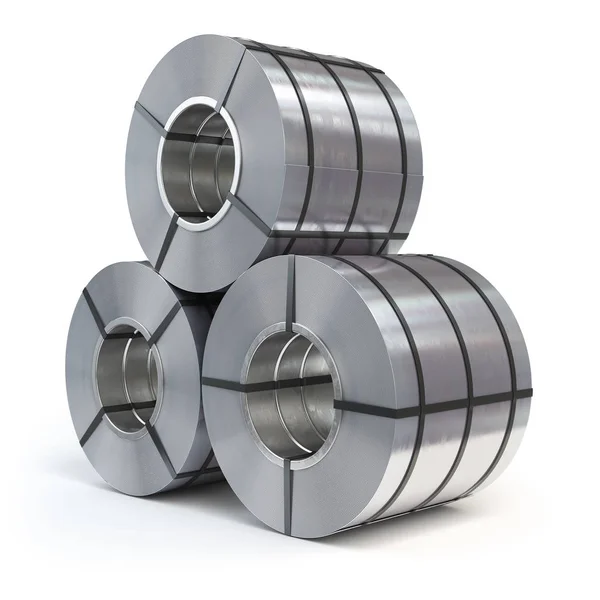
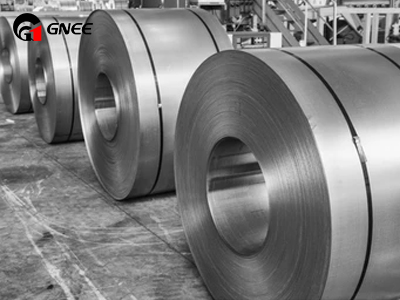
Galvalume steel coil (GL), a hot-dip coated steel product composed of 55% aluminum, 43.4% zinc, and 1.6% silicon (compliant with ASTM A792/A792M), is celebrated for its exceptional corrosion resistance, thermal stability, and cost-effectiveness over the lifecycle—making it a preferred material across diverse industries, from building roofing to home appliances. Unlike traditional galvanized steel, Galvalume combines the barrier protection of aluminum (forming a dense Al₂O₃ oxide layer) and the sacrificial protection of zinc, delivering 2–6 times the corrosion resistance of galvanized steel and a service life of up to 50 years in mild environments. This article explores the multifaceted applications of Galvalume steel coil, highlighting its performance advantages, industry standards, and practical value in each field, providing professional insights for manufacturers, contractors, and project decision-makers.
1. Roofing & Building Envelope: The Core Application of Galvalume
As the most mature and widely used application field of Galvalume steel coil, roofing and building envelope account for 65% of the global Galvalume consumption (2026 industry report), thanks to its superior weather resistance, heat reflectivity, and durability. Galvalume’s unique coating structure enables it to withstand extreme temperatures, heavy rainfall, salt spray, and industrial pollutants, making it suitable for all types of buildings—from residential and commercial to industrial and infrastructure.
In roofing applications, Galvalume steel coil (typically with a coating weight of AZ150–AZ185) is processed into standing seam roofs, corrugated roofs, and sandwich panels, widely used in coastal areas, industrial zones, and large-span buildings. According to a 20-year field test conducted by the American Iron and Steel Institute (AISI), Galvalume roofing in coastal environments maintains intact performance for 20–30 years, while traditional galvanized roofing fails in 5–8 years. Its high heat reflectivity (≥80% of solar radiation, 30% higher than galvanized steel) also reduces building cooling loads by 15–20%, helping achieve energy efficiency goals.
Beyond roofing, Galvalume is also used in wall panels, gutters, fascias, and curtain walls. For example, in industrial plants with high humidity and chemical emissions, Galvalume wall panels resist corrosion caused by acid mist and water vapor, reducing maintenance costs by 40–60% compared to painted steel. In infrastructure projects, such as highway service stations and railway stations, Galvalume’s lightweight (30–50 kg/m² for roofing panels) and easy installation characteristics shorten construction cycles by 10–15%.
2. Home Appliances: A Reliable Material for Durability & Aesthetics
Galvalume steel coil has become an essential material in the home appliance industry, accounting for 20% of its global applications, due to its corrosion resistance, formability, and compatibility with painting and printing processes. Home appliance manufacturers prefer Galvalume for its ability to withstand daily use, moisture, and temperature changes, while maintaining a sleek appearance.
The most common applications include the outer casings and inner liners of refrigerators, washing machines, air conditioners, and ovens. For refrigerators, Galvalume’s corrosion resistance prevents rust caused by condensation and food spills, ensuring a service life of 10–15 years. The inner liners of ovens use Galvalume with a high-temperature resistant coating, as it can withstand long-term temperatures of up to 315°C (short-term up to 370°C) without discoloration or degradation—far exceeding the heat resistance of galvanized steel (which degrades above 300°C).
In air conditioning units, both indoor and outdoor units use Galvalume steel coil. Outdoor units, exposed to rain, sunlight, and dust, benefit from Galvalume’s salt spray resistance (≥1,000 hours to red rust initiation per ASTM B117 test), ensuring stable performance in coastal and humid regions. Additionally, Galvalume’s excellent paint adhesion allows for a variety of color finishes, meeting consumer aesthetic demands while enhancing the appliance’s corrosion resistance.
3. Infrastructure & Industrial Equipment: Withstanding Harsh Environments
Galvalume steel coil plays a critical role in infrastructure and industrial equipment, where durability and corrosion resistance are non-negotiable. This field accounts for 10% of global Galvalume consumption, covering highway guardrails, solar mounting brackets, transmission towers, and agricultural equipment.
Highway guardrails, exposed to outdoor elements year-round, rely on Galvalume’s corrosion resistance to withstand road salt, rain, and UV radiation. Tests show that Galvalume guardrails have a service life of 25–30 years, compared to 10–15 years for galvanized guardrails, reducing replacement and maintenance costs significantly. Solar mounting brackets, which are often installed in open areas (such as deserts and coastal regions), use Galvalume to resist corrosion and extreme temperatures, ensuring the stability of solar panels for 25+ years—the standard service life of solar systems.
In the agricultural industry, Galvalume is used in farm sheds, grain storage silos, and agricultural machinery parts. Its resistance to agricultural chemicals and moisture prevents rust and degradation, extending the service life of equipment in harsh rural environments. Industrial equipment, such as heat exchangers and ventilation ducts, also uses Galvalume for its thermal conductivity and corrosion resistance, ensuring efficient and long-term operation.
4. Automotive Industry: Lightweight & Corrosion-Resistant Solutions
While accounting for a smaller share (5% of global applications), Galvalume steel coil is increasingly used in the automotive industry, driven by the demand for lightweight materials and improved corrosion resistance. Automakers use Galvalume for underbody components, exhaust systems, and wheel arches—areas prone to corrosion from road salt, water, and debris.
The underbody of vehicles, exposed to constant contact with road surfaces and environmental pollutants, requires a material that can resist rust and degradation. Galvalume’s sacrificial protection mechanism (zinc corroding to protect the steel substrate) and barrier protection (aluminum oxide layer) ensure that underbody components remain intact for the vehicle’s service life (10–15 years). Additionally, Galvalume’s lightweight properties help reduce vehicle weight, improving fuel efficiency by 3–5% compared to traditional steel materials.
Exhaust systems, which operate at high temperatures, benefit from Galvalume’s heat resistance—withstanding temperatures up to 315°C long-term. This makes it an ideal material for exhaust manifolds and tailpipes, replacing more expensive materials like stainless steel in some mid-range vehicles.
5. Key Advantages Driving Galvalume’s Versatility
The wide-ranging applications of Galvalume steel coil are rooted in its unique combination of performance advantages, which address the core needs of different industries. Below is a summary of its key benefits, supported by industry data:
| Advantage |
Performance Data |
Relevant Application Fields |
| Corrosion Resistance |
2–6× that of galvanized steel; ≥1,000 hours salt spray test (ASTM B117) |
Roofing, coastal infrastructure, automotive underbody |
| Heat Resistance |
315°C long-term, 370°C short-term; ≥80% solar reflectivity |
Oven liners, exhaust systems, roofing |
| Formability & Paint Adhesion |
Elongation of 16–20%; compatible with PVDF/polyester coatings |
Home appliances, decorative panels |
| Lifecycle Cost-Effectiveness |
47% lower 20-year lifecycle cost than galvanized steel |
All applications, especially large-scale projects |
| Sustainability |
100% recyclable without quality loss; low carbon footprint |
All industries, aligning with green development goals |
From roofing that withstands coastal storms to home appliances that serve daily life, from infrastructure that connects cities to automotive components that enhance efficiency, Galvalume steel coil has proven its versatility and reliability across industries. Its unique 55% Al–Zn–Si coating delivers unmatched corrosion resistance, thermal stability, and cost-effectiveness, making it a sustainable choice for modern projects.
As industries continue to pursue durability, energy efficiency, and sustainability, the demand for Galvalume steel coil is expected to grow at a CAGR of 5.2% from 2026 to 2030 (Global Steel Coating Market Report). At GNEE STEEL, we supply high-quality Galvalume steel coil (AZ50–AZ185) compliant with ASTM, EN, and GB standards, tailored to the specific needs of each application field—whether it’s roofing, home appliances, infrastructure, or automotive. With our advanced production technology and strict quality control, we provide reliable materials that drive innovation and durability in every industry we serve.