Cold rolled steel
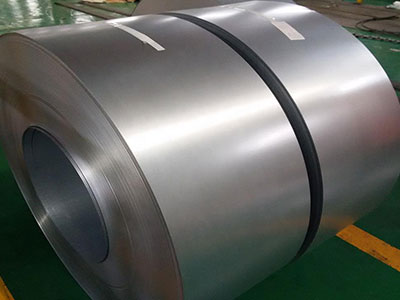
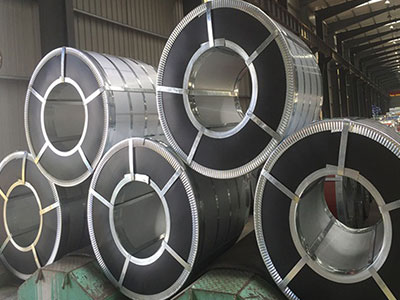
Cold rolling refers to processing steel plates or steel strips into various types of steel through cold drawing, cold bending, cold drawing and other cold processing at normal temperature. Hot-rolled coils are used as raw materials and are rolled at room temperature and below the recrystallization temperature to form cold-rolled steel strips. However, because cold-rolled raw coils are relatively brittle and hard and not suitable for processing, cold-rolled steel is usually required to be annealed, pickled and surface smooth before being delivered to customers.
Aluminum cold rolling is divided into plate rolling and foil rolling. Those with a thickness of 0.15~ or more are called plates, and those with a thickness of 0.15~ or less are called foils.
Advantages of cold rolled steel
Compared with hot-rolled steel, cold-rolled steel has the following advantages:
① Since there is no temperature drop and temperature unevenness in hot-rolled steel production during the cold rolling process, extremely thin steel can be produced with a minimum thickness of 0.001 mm;
② During the cold rolling process, no iron oxide scale is produced on the surface of the rolled piece, and it is pickled before rolling, so the surface quality of the product is good, and various special surfaces can be given to the strip according to requirements, such as rough surface, suede surface or polished surface, etc.;
③Cold-rolled steel strip has good mechanical properties and process properties (such as higher strength, lower yield limit, good deep drawing performance, etc.);
④Cold-rolled steel can meet a wide range of mechanical property requirements through a certain degree of cold-rolling deformation and appropriate coordination with relatively simple heat treatment.
Application of cold rolled steel strip
Because of its own properties,
cold-rolled steel has become an indispensable material in the manufacturing of intelligent machines and precision instruments. Nowadays, many types of household appliances also require cold-rolled steel to manufacture various components. While ensuring a longer service life, it also provides a better aesthetic experience and brings greater room for improvement in the design of household appliances.
Of course, the applications of cold-rolled steel are not limited to these. It is widely used in various types of manufacturing and high-strength applications. For example, vehicles such as airplanes and cars require wear-resistant materials to ensure their service life, and they also need physical properties such as pressure resistance and impact resistance to ensure their safety.
Looking around the world, the production of cold-rolled steel in many developed countries has reached 30% of all steel production. In today's rapidly developing China, the demand for cold-rolled steel is also growing rapidly.
Our company proposes different solutions based on the thickness, surface finish, hardness, and strength of the steel coils required by the customer's materials, and for the actual industry. Welcome to
contact us to learn more!

.jpg)
(1).jpg)