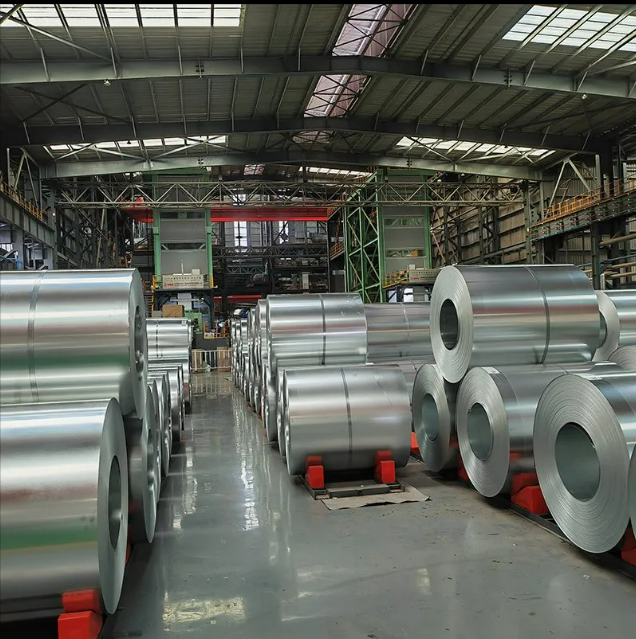
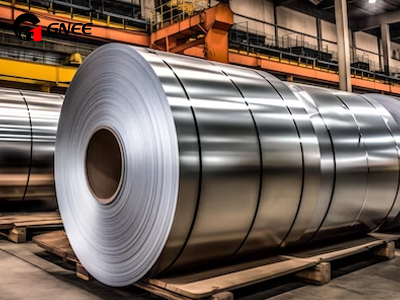
Hot-dip galvanizing strip steel is a commonly used anti-corrosion treatment process. By immersing the strip steel in molten zinc, a layer of zinc-iron alloy layer and a layer of pure zinc are formed, thereby improving the corrosion resistance of the strip steel.
The following is an introduction to the process of hot-dip galvanized strip:
Pretreatment: Before hot-dip galvanizing, the strip needs to go through a series of pretreatment steps, including oil removal, rust removal and surface cleaning. The purpose of these steps is to remove dirt and oxides from the surface of the strip in preparation for subsequent galvanizing.
Pickling: After the strip is pre-treated, it is pickled. Pickling can further remove oxides and impurities on the surface of the strip and improve the adhesion of the galvanized layer. Commonly used pickling solutions include hydrochloric acid and sulfuric acid.
Dip plating: The pickled steel strip is immersed in molten zinc for galvanizing treatment. The temperature of molten zinc is usually around 450°C. The strip stays in the zinc bath for a period of time, allowing the zinc to react with the surface of the strip to form a zinc-iron alloy layer and a pure zinc layer.
Slag removal: After the strip is taken out of the zinc bath, a layer of zinc slag will adhere to the surface. In order to improve the quality of the galvanized layer, the strip needs to be slag removed. Slag removal can be carried out by mechanical brushing, water spray cleaning and other methods.
Cooling: The strip steel after slag removal needs to be cooled down to room temperature. Cooling can be done by natural cooling or water cooling. The process parameters and specific steps of hot-dip galvanized strip may vary due to different production equipment and process requirements. In actual applications, it needs to be adjusted and optimized according to specific conditions to ensure the quality and performance of the galvanized layer. At the same time, in order to ensure the safety of operators, relevant operating procedures and safety requirements should be strictly followed.

.png)
.png)