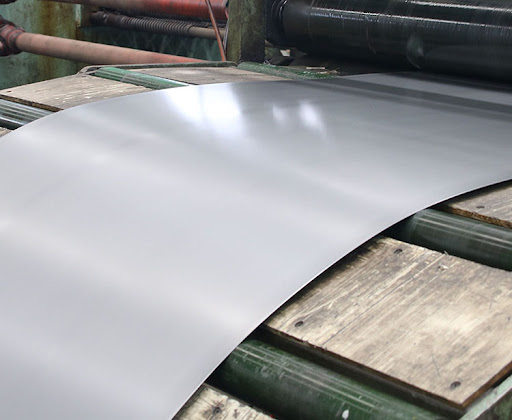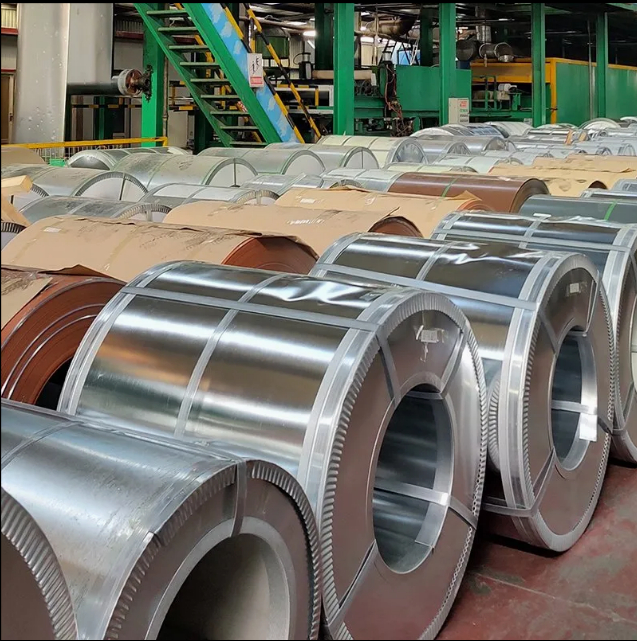
S220GD+ZM is a zinc-aluminium-magnesium coated structural steel coil per EN 10346. It combines a minimum 220 MPa yield strength with the self-healing ZM coating, and is now widely used for ground-mount and rooftop photovoltaic mounting profiles, brackets, purlins and clamps.
A PV racking system has to do four things at the same time: carry the snow and wind load of the array for 25+ years, resist corrosion in open-air exposure, survive roll-forming and punching without coating cracks, and keep its cost competitive against aluminium and heavy zinc coatings. S220GD+ZM is engineered to meet all four.
| Requirement | S220GD+ZM Performance |
|---|---|
| Static load on C/U rails and brackets | ReH ≥ 220 MPa, Rm 300–430 MPa — sufficient for most ground-mount and rooftop rail sections per Eurocode 3. |
| Fatigue from wind uplift cycles | Uniform ZM layer stays bonded through 106+ bending cycles in roll forming without flaking. |
| Cold forming into C channel, omega, Z section | A80 ≥ 20% elongation — supports tight bend radii down to 2× thickness without coating crack. |
| Welding of earthing lugs and splices | Compatible with resistance spot welding, arc welding and laser welding using zinc-coated-steel parameters. |
Solar farms sit in coastal salt mist, agricultural ammonia, high-UV deserts or humid tropical climates — all aggressive for bare steel. The ZM layer contains roughly 1–3% aluminium and 1–3% magnesium, which form a dense, stable corrosion-product film (simonkolleite-type) over the cut edges and scratches. Salt-spray performance of ZM120 already matches or exceeds conventional Z275, so a thinner ZM layer can replace a much heavier zinc coating at the same design life.
| Site Environment (ISO 9223) | Recommended ZM Coating | Typical PV Application |
|---|---|---|
| C2 – Inland, dry | ZM90 / ZM120 | Rooftop residential, low-corrosion zones |
| C3 – Urban / industrial | ZM120 / ZM180 | Commercial rooftop, inland ground-mount |
| C4 – Coastal / agricultural | ZM180 / ZM275 | Coastal ground-mount, livestock-farm roofs |
| C5 – Offshore / heavy industrial | ZM275 / ZM310 | Salt marsh PV, floating solar structural parts |
PV mounting profiles are always slit into narrow strips, with punched bolt holes and cut ends exposed. On a traditional galvanized coil, those cut edges are the first place red rust appears. With ZM, the magnesium migrates to the bare steel and seals the edge with a protective film, so most post-installation touch-up painting can be skipped.
1. Can S220GD+ZM fully replace S350GD+ZM for PV rails?
For most residential and commercial rooftop arrays, yes. S350GD+ZM is only needed when the structural calculation requires higher strength, e.g. very long spans or heavy snow load.
2. Is ZM coating accepted by IEC and UL listed PV system designs?
The IEC and UL standards cover system performance, not the coating type. Most major racking OEMs already list S220GD+ZM and equivalent ZM grades as approved options in their installation manuals.
3. What thickness range is most common for PV mounting?
1.5–2.5 mm for C and U rails; 2.0–3.0 mm for ground-mount posts; 1.0–1.5 mm for clamps and brackets.
4. Does ZM coating affect the earthing of the PV array?
No. ZM is electrically conductive. Standard earthing clamps and lugs work the same as on GI coil.
For a quotation tailored to your project — site corrosion class, profile drawing and tonnage — send the details to our sales team via the contact page. We supply mill test certificates and salt-spray reports on request.
.png)