DC53D+ZM Zn-Al-Mg Coated Steel: Properties, Coating and Applications
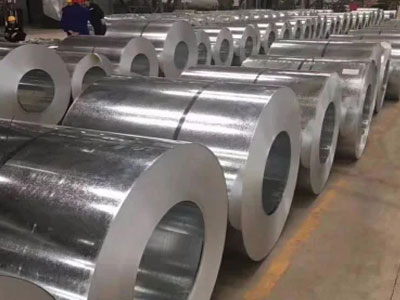
DC53D+ZM Zn-Al-Mg coated steel is a high-formability coated steel developed for applications that require a combination of excellent forming performance and enhanced corrosion protection. It is particularly suitable for components manufactured through bending, stamping, profiling, and other cold-forming processes.
At GNEE STEEL, we supply Zn-Al-Mg coated steel for customers requiring a practical balance between formability, corrosion resistance, surface performance, and fabrication efficiency.
What Is DC53D+ZM Zn-Al-Mg Coated Steel?
DC53D+ZM, commonly corresponding to DX53D+ZM under EN 10346, is a low-carbon steel substrate coated with a zinc-aluminum-magnesium alloy through a continuous hot-dip coating process.
The product combines two important characteristics:
A highly formable steel substrate for stamping and cold forming
A Zn-Al-Mg coating designed to provide improved corrosion protection compared with conventional zinc coatings in many applications
The addition of aluminum and magnesium changes the corrosion behavior of the coating. During exposure to corrosive environments, the coating can form stable corrosion products that help protect exposed areas and slow the progression of corrosion. This is one reason Zn-Al-Mg coated steel has become increasingly attractive for outdoor construction, automotive components, solar mounting structures, and fabricated steel parts.
Unlike structural grades such as S250GD+ZM or S350GD+ZM, which are selected primarily for load-bearing performance, DX53D+ZM is positioned more toward forming and deep-drawing applications.
Key Properties of DC53D+ZM Steel
1. Excellent Formability
DX53D+ZM is designed for cold forming and deep-drawing applications. Its relatively low yield strength and high elongation allow the material to undergo significant deformation without excessive cracking.
This makes it suitable for components with complex profiles, curved sections, flanges, holes, and formed edges.
For manufacturers, good formability can help reduce production problems such as cracking, edge failure, and deformation during stamping.
2. Enhanced Corrosion Protection
The ZM coating consists primarily of zinc with aluminum and magnesium additions. Its corrosion behavior differs from that of conventional hot-dip galvanized coatings.
The coating can provide effective protection to the steel substrate, while corrosion products formed from the Zn-Al-Mg layer can contribute to protecting the surrounding surface. This makes ZM-coated steel particularly attractive for applications exposed to humidity, weather, and other corrosive conditions.
However, corrosion resistance should always be evaluated against the actual environment, coating mass, processing method, and design requirements rather than assuming that every ZM coating provides the same service life.
3. Good Performance After Fabrication
DC53D+ZM can be processed using common steel fabrication methods, including roll forming, bending, stamping, punching, and profiling.
For manufacturers producing large volumes of formed parts, the combination of formability and corrosion protection can reduce the need for additional corrosion-protection processes after fabrication.
Fabrication parameters should still be optimized according to coating thickness, tooling condition, bend geometry, and production speed.
4. Suitable for Lightweight Components
Because the material combines good formability with corrosion protection, designers may be able to use thinner-gauge steel for certain components while maintaining the required functional performance.
This can help reduce component weight and material consumption, particularly in automotive, appliance, construction, and equipment applications.
DC53D+ZM vs DX53D+Z
One common purchasing question is whether ZM-coated steel and conventional galvanized steel are interchangeable.
They are not exactly the same.
DX53D+Z uses a conventional zinc coating, while DX53D+ZM uses a zinc-aluminum-magnesium coating. Both can offer corrosion protection, but their coating chemistry and corrosion behavior are different.
For general indoor applications, conventional galvanized steel may already provide sufficient protection. For applications requiring improved corrosion performance and reduced maintenance, Zn-Al-Mg coated steel may offer a more suitable solution.
The choice should be based on the environment, required service life, forming requirements, coating mass, and total project cost.
GNEE STEEL supplies Zn-Al-Mg coated steel tailored to different forming and corrosion-protection requirements. Contact us with your required grade, thickness, width, coating specification, and quantity for a professional quotation and technical confirmation.

.png)