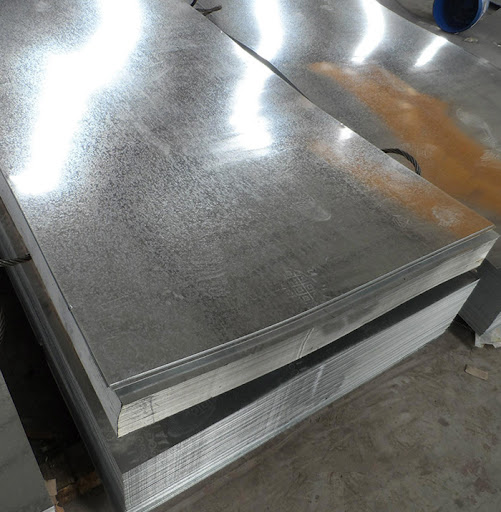
With the rapid development of the global photovoltaic industry, the requirements for solar mounting structures have become increasingly strict. These structures must not only provide stable mechanical support but also maintain long-term durability under harsh outdoor environments. Among various structural components, galvanized C channel steel has become one of the most widely used materials in solar mounting systems due to its excellent balance of strength, corrosion resistance, and cost efficiency.
In modern photovoltaic installations, galvanized C channels are commonly used as the main structural support for rooftop solar systems, ground-mounted solar farms, and industrial PV structures. When combined with high-performance coatings such as Zn-Al-Mg (zinc-aluminum-magnesium), the performance of the C channel is further enhanced, making it an ideal choice for long-term outdoor applications.
.png) 1. High Structural Strength for Solar Load Requirements
1. High Structural Strength for Solar Load Requirements
One of the key advantages of galvanized C channel steel is its high load-bearing capacity. Solar panels are continuously exposed to wind pressure, snow loads, and structural vibration. Therefore, the mounting system must ensure long-term stability without deformation.
High-strength steel grades such as S320GD+ZM and S350GD+ZM are commonly used in the production of C channels. These materials provide excellent yield strength, typically up to 350 MPa, ensuring that the structure can safely support photovoltaic modules even in extreme weather conditions.
Compared with traditional support materials such as aluminum profiles or low-strength steel, galvanized C channels offer a more stable and cost-effective solution for large-scale solar projects.
2. Excellent Corrosion Resistance for Outdoor Environments
Solar mounting systems are usually installed in environments exposed to rain, humidity, UV radiation, and even coastal salt spray. Corrosion resistance therefore becomes a critical factor affecting service life.
Galvanized C channels with Zn-Al-Mg coating provide significantly improved corrosion resistance compared to conventional hot-dip galvanized steel. The combination of zinc, aluminum, and magnesium creates a multi-layer protection system:
Zinc provides cathodic protection
Aluminum forms a stable barrier layer
Magnesium enhances self-healing performance at cut edges
This advanced coating structure ensures long-term protection even at drilled holes, cut edges, and scratched surfaces—areas where traditional coatings are more vulnerable.
As a result, galvanized C channels are widely used in coastal solar farms, desert PV installations, and high-humidity regions.
.png) 3. Lightweight Design with High Efficiency
3. Lightweight Design with High Efficiency
Another important advantage is the ability to achieve a lightweight yet strong structural design. Galvanized C channel steel is produced through precision roll forming, allowing engineers to design optimized cross-sections that maximize strength while reducing material usage.
This lightweight feature brings several benefits:
Easier transportation and installation
Reduced foundation load for rooftop systems
Lower overall project cost
Faster construction speed
For large-scale photovoltaic projects, even small weight reductions can significantly reduce installation time and logistics expenses.
4. Excellent Compatibility with Customized Design
Modern photovoltaic systems are not standardized products; they require flexible design based on different installation environments. Galvanized C channels can be easily customized through advanced manufacturing processes such as:
Roll forming
CNC punching
Laser cutting
Bending and welding
This allows manufacturers to produce C channels with different lengths, hole patterns, slot designs, and connection systems according to engineering drawings.
Whether it is rooftop solar brackets, ground-mounted systems, or agricultural PV structures, galvanized C channels can be fully adapted to project-specific requirements.
5. Long Service Life and Low Maintenance Cost
One of the most important considerations in solar projects is lifecycle cost. Although initial material selection is important, long-term maintenance cost plays an even greater role in project profitability.
Due to the superior corrosion resistance of Zn-Al-Mg coated galvanized steel, C channels can achieve a service life of 25–30 years or more under normal environmental conditions. This significantly reduces:
Maintenance frequency
Replacement costs
Structural inspection requirements
In long-term photovoltaic investments, this durability directly improves return on investment (ROI).
.png)
Galvanized C channel steel has become a core material in modern photovoltaic mounting systems due to its combination of high strength, excellent corrosion resistance, lightweight structure, and strong customization capability. When produced using advanced Zn-Al-Mg coated steels such as S350GD+ZM, its performance is further enhanced, making it suitable for long-term outdoor solar applications in various environments.
From structural reliability to cost efficiency and long service life, galvanized C channels provide a complete solution for solar mounting systems. As the global demand for renewable energy continues to grow, their importance in photovoltaic engineering will only continue to increase.
Inquiry Support
If you are looking for reliable galvanized C channel solutions for solar mounting systems, we can provide customized manufacturing based on your drawings, including different steel grades, coating options, punching designs, and lengths to meet your project requirements!

.png)