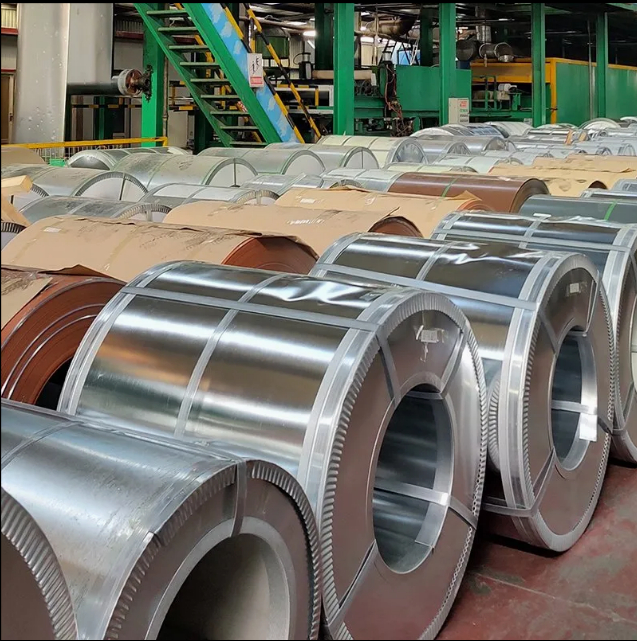
At a fundamental level, both S250GD and S280GD Galvanized Steel belong to structural steel grades, indicated by the letter “S” in their designation. The numbers “250” and “280” represent the minimum yield strength in megapascals, meaning S280GD provides higher structural strength than S250GD. The “GD” suffix confirms that both steels are supplied with a zinc coating applied through continuous hot-dip galvanizing, ensuring long-term corrosion protection.
Understanding these differences is essential for engineers, buyers, and project managers who need to select the most suitable galvanized steel grade for structural performance, forming requirements, and cost efficiency.
Although both grades follow similar chemical design principles, S280GD typically has a slightly stricter composition control to support its higher yield strength.
Typical Chemical Composition Comparison
| Grade | C (%) | Mn (%) | P (%) | S (%) | Al (%) |
|---|---|---|---|---|---|
| S250GD | ≤0.20 | ≤1.70 | ≤0.10 | ≤0.045 | ≥0.015 |
| S280GD | ≤0.20 | ≤1.80 | ≤0.10 | ≤0.045 | ≥0.015 |
The slightly higher manganese allowance in S280GD Galvanized Steel contributes to improved strength while maintaining acceptable formability. Both grades are suitable for welding and general fabrication under standard conditions.
The most direct difference between S250GD and S280GD Galvanized Steel is mechanical performance, especially yield strength.
Mechanical Property Comparison
| Property | S250GD | S280GD |
|---|---|---|
| Yield Strength | ≥250 MPa | ≥280 MPa |
| Tensile Strength | 330–410 MPa | 360–430 MPa |
| Elongation | ≥19% | ≥18% |
S280GD Galvanized Steel offers higher load-bearing capacity, making it more suitable for applications where structural rigidity is critical. However, S250GD provides slightly better elongation, which can be advantageous in forming-intensive applications such as roll forming or bending.
Both S250GD and S280GD Galvanized Steel are available with identical zinc coating options and surface finishes, allowing designers to focus on mechanical requirements rather than corrosion protection differences.
Zinc Coating Options
| Coating Type | Zinc Weight (g/m²) | Typical Use |
|---|---|---|
| Z100 | 100 | Indoor structures |
| Z180 | 180 | General construction |
| Z275 | 275 | Outdoor exposure |
Surface Structure Options
| Surface Finish | Characteristics |
|---|---|
| Regular Spangle | Economical, traditional appearance |
| Minimized Spangle | Uniform surface, paint-friendly |
| Zero Spangle | Smooth finish, high-end applications |
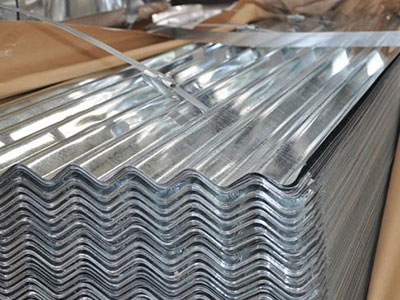
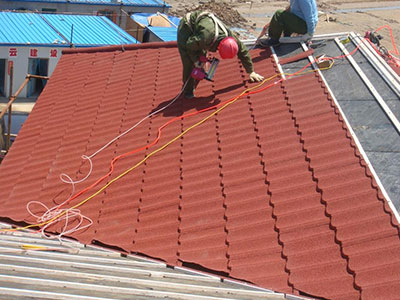
S250GD Galvanized Steel is commonly used in secondary structural components, roofing systems, wall panels, cable trays, and light steel frameworks where moderate strength and good formability are required. Its balanced performance and cost efficiency make it a preferred choice for large-volume projects.
S280GD Galvanized Steel is more suitable for applications requiring higher structural strength, such as load-bearing steel frames, industrial platforms, and structural supports exposed to higher stress levels. The higher yield strength allows designers to reduce material thickness in some cases, optimizing overall structural weight.
The choice between S250GD and S280GD Galvanized Steel should be based on a clear evaluation of load requirements, forming complexity, and cost control rather than simply selecting the higher-strength grade.
GNEE STEEL supplies both S250GD and S280GD Galvanized Steel with stable mechanical performance, uniform zinc coating, and precise dimensional control. With flexible specifications, reliable quality inspection, and professional technical support, GNEE STEEL helps customers select the most suitable galvanized steel grade for their specific applications. For detailed specifications, pricing, and technical consultation, customers are encouraged to contact GNEE STEEL and initiate an inquiry with confidence.
.png)