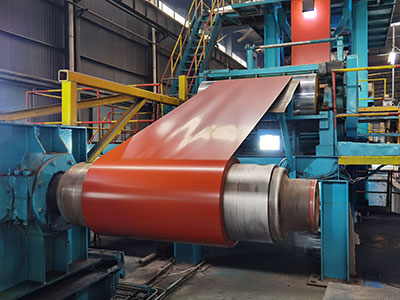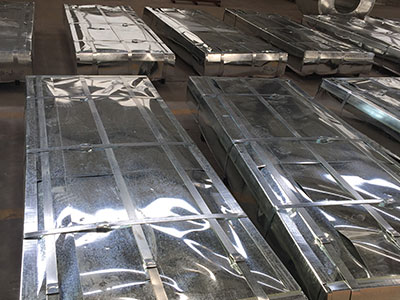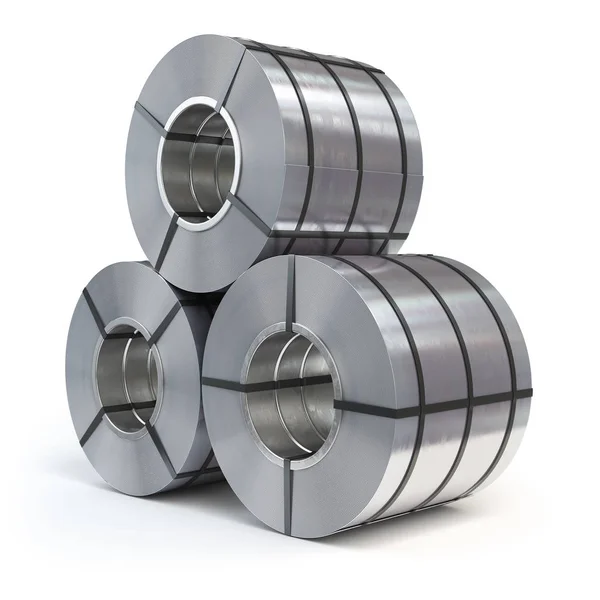
Cold rolled steel sheet is a fundamental material widely used in industries such as automotive manufacturing, home appliances, construction, metal furniture, and precision fabrication. Compared with hot rolled steel, cold rolled steel is processed at room temperature, which significantly improves surface quality, dimensional accuracy, and mechanical consistency. These advantages make cold rolled steel particularly suitable for applications requiring tight tolerances, smooth surfaces, and reliable forming performance.
Under the EN 10130 standard, DC01 and DC03 are two of the most commonly specified low-carbon cold rolled steel grades. While both belong to the same standard and share similar chemical compositions, their mechanical properties and forming capabilities differ due to variations in processing control. Understanding the differences between DC01 and DC03 is essential for buyers, engineers, and manufacturers to select the right material for specific production requirements.
DC01 is a general-purpose cold rolled steel grade designed for basic forming and structural applications. It is characterized by stable mechanical properties, good flatness, and consistent thickness, making it suitable for a wide range of standard fabrication processes.
From a mechanical perspective, DC01 typically has relatively higher yield strength compared with deeper drawing grades. This provides adequate rigidity and strength for parts that do not require complex forming. DC01 performs well in bending, simple stamping, laser cutting, and welding operations, which makes it widely used in metal enclosures, brackets, panels, shelving systems, and structural components.
In terms of surface quality, DC01 offers a smooth, clean finish that is suitable for painting, powder coating, galvanizing, and other surface treatments. As a result, DC01 is often chosen for applications where appearance and coating adhesion are important, but extreme formability is not required.
DC03 is a cold rolled steel grade developed specifically for improved formability. Compared with DC01, DC03 undergoes more stringent control during rolling and annealing processes, resulting in lower yield strength and higher elongation. This makes DC03 more suitable for parts that require deeper drawing, more complex shapes, and reduced risk of cracking during forming.
DC03 is commonly used in automotive interior parts, appliance housings, ventilation components, and metal products with moderate drawing depth. Its excellent plastic deformation capability allows manufacturers to achieve smooth, uniform shapes with minimal surface defects.
Another important feature of DC03 is its improved consistency during mass production. The uniform mechanical behavior helps reduce scrap rates, tool wear, and production interruptions, especially in high-volume stamping operations.
From a chemical standpoint, DC01 and DC03 are both low-carbon steels, which contributes to their good weldability and forming behavior. Their compositions are very similar, and the main differences lie in processing rather than alloying.
| Element | DC01 (Typical Max %) | DC03 (Typical Max %) |
|---|---|---|
| Carbon (C) | 0.12 | 0.08 |
| Manganese (Mn) | 0.60 | 0.50 |
| Phosphorus (P) | 0.045 | 0.045 |
| Sulfur (S) | 0.045 | 0.045 |
The slightly lower carbon content in DC03 contributes to its softer structure and enhanced ductility. However, it is important to note that the practical performance difference between the two grades is primarily controlled by rolling reduction and annealing conditions rather than chemistry alone.
The most significant distinction between DC01 and DC03 lies in their mechanical properties, particularly yield strength and elongation.
| Property | DC01 | DC03 |
|---|---|---|
| Yield Strength (MPa) | ≥ 140 | ≥ 120 |
| Tensile Strength (MPa) | 270 – 410 | 270 – 370 |
| Elongation (%) | ≥ 28 | ≥ 34 |
DC01’s higher yield strength provides better resistance to deformation, which is beneficial for parts requiring stiffness and load-bearing capacity. DC03, on the other hand, offers higher elongation, allowing it to undergo more extensive plastic deformation without cracking. This makes DC03 a preferred choice for deep drawing and complex stamping operations.
Selecting between DC01 and DC03 should be based on forming complexity, production efficiency, and end-use requirements.
DC01 is well suited for applications such as electrical cabinets, steel furniture frames, construction panels, and general-purpose metal parts. These applications typically involve simple bending or shallow stamping, where strength and dimensional stability are more important than extreme ductility.
DC03 is more appropriate for components that require smoother transitions, deeper draws, or tighter radii. Typical uses include appliance shells, automotive interior components, HVAC ducts, and decorative metal products. In these cases, the improved formability of DC03 helps reduce defects such as wrinkling, tearing, and springback.
DC01 and DC03 cold rolled steel sheets are both reliable materials under the EN 10130 standard, each offering distinct advantages. DC01 excels in general-purpose applications where strength, flatness, and cost efficiency are priorities. DC03 stands out in forming-intensive applications that demand higher ductility and smoother shaping performance.
By understanding the differences in mechanical properties, formability, and application suitability, buyers and manufacturers can make informed decisions that optimize both product quality and production efficiency. Selecting the right grade ensures stable performance, reduced manufacturing risk, and long-term value in cold rolled steel applications.
.png)