VR
Gnee Steel News

Advantages of Cold Rolled Steel

Release Tme: 2024-02-04
Read:
Share:
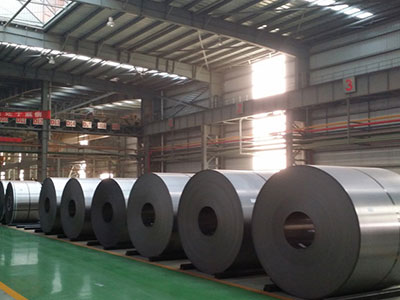
Cold rolled steel starts with large billets or staves cast from hot liquid metal, then the billets are heated to eventually reach over 1700°F. At this high temperature, they are easily flattened into long sheets with a set of rolls and then rolled into large coils. To create bars or plates, the heated billets are rolled to the desired thickness and cut into sections before cooling. As the rolled or cut steel cools to room temperature, it shrinks slightly, giving each piece a less precise final size with somewhat rounded edges. The surface is slightly rough and covered with scales. are used for further processing after the steel has cooled. Cold rolling is most often used to reduce the thickness of plates and sheet metal during the manufacturing stage. This "cold forming" is either done by re-rolling at around room temperature and then rolling into sheets or drawing into bars or tubes. Additional steps such as drawing, grinding or turning can create the desired finished product.
 

Increased Strength
Cold rolled steel has very superior strength. When rollers compress steel at room temperature, the steel becomes stronger due to strain hardening.

Improved surface finish
In addition to being stronger, cold rolled steel also has an improved surface finish. It is characterized by smoothness and few surface defects. This not only improves the aesthetics of cold rolled steel, but also makes it a more suitable material for certain applications, such as the construction of bridges.

Tighter tolerances
Cold rolling allows for tighter tolerances. What does this mean exactly? In metalworking, the term "tolerance" refers to the overall thickness of the metal. Cold rolled steel is usually thinner than hot rolled steel (without sacrificing strength). Therefore, cold rolling offers tighter tolerances than other steelmaking processes.

Multiple Options
Several different options are available for making cold rolled steel, some of which include full hard, semi-hard, quarter hard and skin rolled. Of all these options, full hard cold rolling is usually preferred because it offers the tightest tolerances. When performed correctly, full hard cold rolling can reduce the thickness of the steel by as much as 50%. Other cold rolling processes can also reduce the thickness of steel, but not as effectively as full hard cold rolling.

Based on the various advantages of cold rolled steel, are you impressed, and feel free to if you need any help.
Related Products
CRGO Oriented Silicon Steel
Cold Rolled Grain M4 M5 CRGO Oriented Silicon Steel
Color Coated Steel Coil
DX51D Galvanized Coil
Related News
Thai Customers Visited GNEE And Ordered 270 Tons Of DC01 Cold Rolled Steel Strip Coils
2024-09-23
Four major functions of galvanized coil surface finishing
Improve the surface straightness of galvanized sheets. After finishing, the straightness of the galvanized sheet must be improved, and the corrugation of the galvanized sheet can be partially removed.
2023-12-25
How to distinguish electro-galvanized steel sheets from hot-dip galvanized steel sheets?
Hot-dip galvanizing can also be called hot-dip galvanizing. Hot-dip galvanizing sheets are made by immersing thin steel sheets in a dissolved zinc bath so that a layer of zinc is absorbed on the surface of the thin steel sheets.
2023-12-18