VR
Gnee Steel News

SPCC Cold Plate

Release Tme: 2023-11-01
Read:
Share:
SPCC cold plate
Cold plate made according to Japanese standards
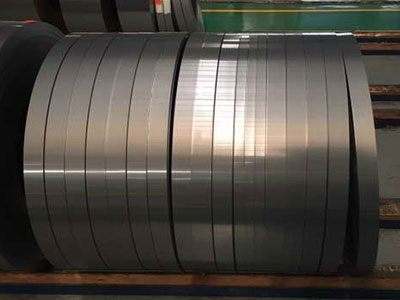
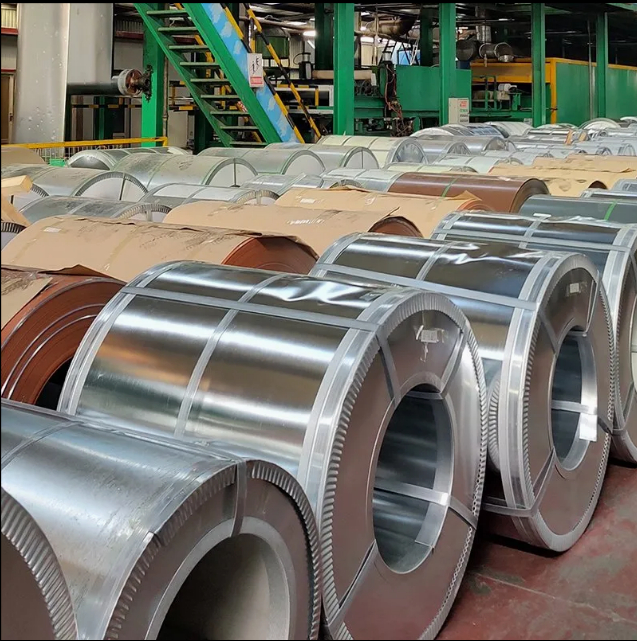
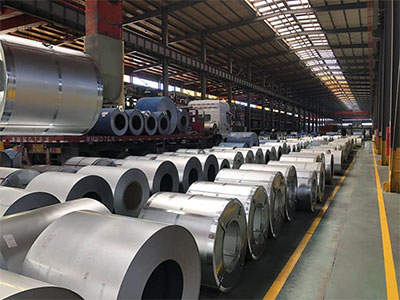
The spcc cold plate is a cold plate made in accordance with Japanese standards (JIS). SPCC was originally the name of "general cold-rolled carbon steel sheets and strips" of the Japanese Standard (JIS). Now many countries or companies directly use it to represent similar steel products they produce.

Introduction to SPCC

Note: Similar grades include SPCD (cold-rolled carbon steel sheets and strips for stamping), SPCE (cold-rolled carbon steel sheets and strips for deep drawing), SPCCK\SPCCCE, etc. (steel for televisions), SPCC4D\SPCC8D, etc. ( Hard steel, used for bicycle rims, etc.), used in different occasions.
S (Steel) means steel;
P (Plate) means plate;
C (Cold) means cold rolling;
C——Common grade, D——Draw grade, E——Deep drawing grade (Elongation)

SPCC composition
GNEE STEEL
Common structural steel in Japanese steel (JIS series) grades mainly consists of three parts.
The first part represents the material, such as: S (Steel) represents steel, F (Ferrum) represents iron;
The second part represents different shapes, types, and uses, such as P (Plate) for plate, T (Tube) for tube, and K (Kogu) for tool;
The third part represents the characteristic number, generally the minimum tensile strength. For example: SS400 - the first S represents steel, the second S represents "structure", 400 is the lower limit tensile strength of 400MPa, and the overall represents ordinary structural steel with a tensile strength of 400MPa.
Note: SPCC--represents generally used cold-rolled carbon steel sheets and strips, equivalent to China's Q195-215A grade. The third letter C is the abbreviation of Cold. When it is necessary to ensure the tensile test, add T at the end of the grade to indicate SPCCT.

type

Applicable grades for Japanese cold-rolled carbon steel sheets: SPCC, SPCD, SPCE Symbols: S-steel, P-plate, C-cold, fourth digit C-common, D-Drawing grade (Draw), E-Deep drawing grade (Elongation)

Heat treatment status

A—annealed, S—annealed + smooth, 8—(1/8) hard, 4—(1/4) hard, 2—(1/2) hard, 1—hard.

Drawing performance level

ZF - used for punching and drawing the most complex parts, HF - used for punching and drawing very complex parts, F - used for punching and drawing complex parts.

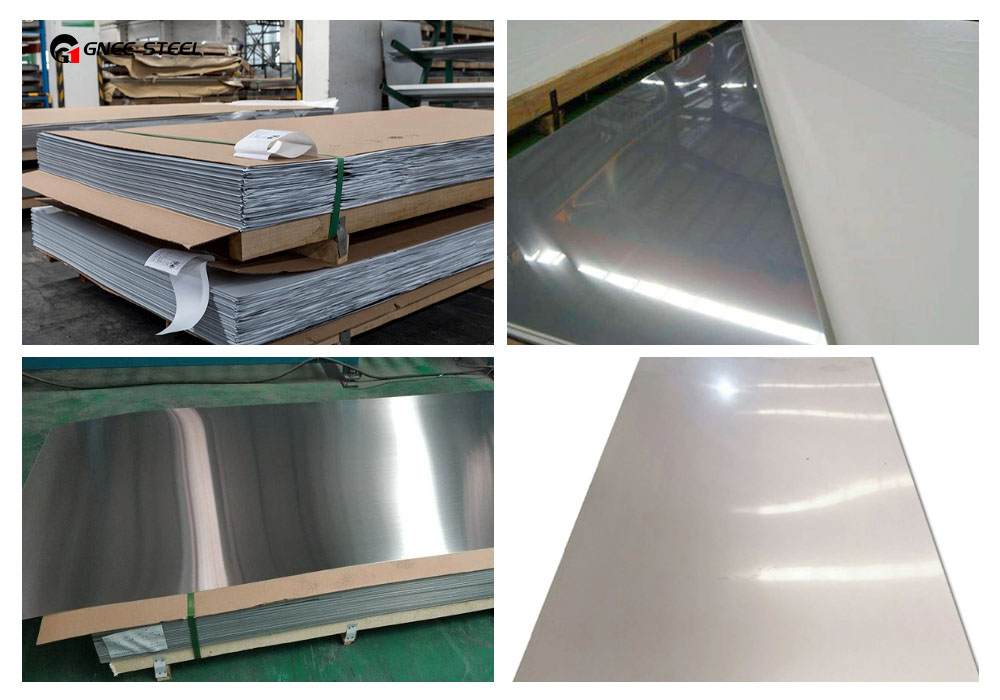
Surface processing status

D - pitted surface (the roll is shot peened after being processed by a grinder), B - bright surface (the roll is finished by a grinder).

Surface Quality

FC—Advanced finishing surface, FB—Higher finishing surface. Status, surface processing status, surface quality code, drawing level (only for SPCE), product specifications and dimensions, shape accuracy (thickness and/or width, length, unevenness).

Markup example

Steel plate, standard number Q/BQB402, brand SPCC, heat treatment state annealed + smooth (S), surface center processing state is pitted D, surface quality is FB level trimmed edge (trimmed edge EC, non-trimmed edge EM) steel plate, thickness 0.5mm, B-level accuracy, width 1000mm, A-level accuracy, length 2000mm, A-level accuracy, unevenness accuracy is PF.A, then the mark is: steel plate ECQ/BQB 402-SPCC-SD-FB/ (0.5B×1000A ×2000A-PF.A)
Related Products
mild steel cold rolled sheet
G90 Steel Sheet Gi Coil for Automotive Plates
Corrugated Galvanized Steel Sheet
M4 27R090 Silicon Steel Cold Rolled Grain Oriented Coil
Related News
Advantages of Galvanized C Channel in Solar Mounting Systems
With the rapid development of the global photovoltaic industry, the requirements for solar mounting structures have become increasingly strict. These structures
2026-07-02
Basic knowledge of hot dip galvanizing
Hot-dip galvanizing was developed from the older hot-dip method. It has a history of 140 years since France applied hot-dip galvanizing to industry in 1836.
2023-11-04
What is the difference between cold rolling and hot rolling?
Hot-rolled steel is rolled at high temperatures. Cold-rolled steel plates have better strength, while cold-rolled hot-rolled steel plates have better ductility. Generally, the thickness of cold rolling is relatively small, while the thickness of hot rolling can be larger. Cold plates are used for cold-formed spring sheets and other parts. The thickness is pretty standard. When not rusty, it looks a bit bright like stainless steel; the hot-rolled surface is rough.
2023-10-20