Definition of galvanized coil coating
1. Normal spangle coating: During the normal solidification process of the galvanized coil zinc layer, the zinc grains grow freely to form a coating with obvious spangle morphology.
2. Small zinc flower coating During the solidification process of the zinc layer, the zinc grains are artificially restricted to form the smallest possible zinc flower coating.
3. Splash-free coating: a coating obtained by adjusting the chemical composition of the plating solution, with no visible spangle morphology and a uniform surface.
4. Zinc-iron alloy coating heat-treats the steel strip after passing through the galvanizing bath, so that the entire coating forms an alloy layer of zinc and iron. This coating has a dark gray appearance, no metallic luster, and is easily pulverized during the violent forming process. Suitable for coatings that can be painted directly without further processing other than general cleaning.
5. Thick coating: For both sides of the galvanized steel plate, coatings with different zinc layer weights are required.
6. Finishing: Finishing is a cold rolling process with a slight deformation of galvanized steel sheets for one or more of the following purposes. Improve the surface appearance of galvanized steel sheets or be suitable for decorative coatings; temporarily minimize the slip lines or creases produced during processing of finished products, etc.
What is the use of galvanized coils?
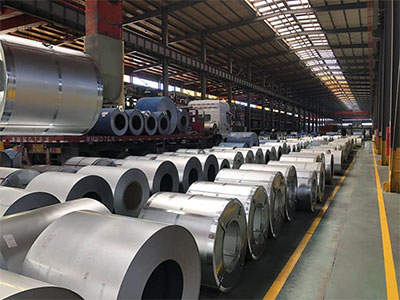
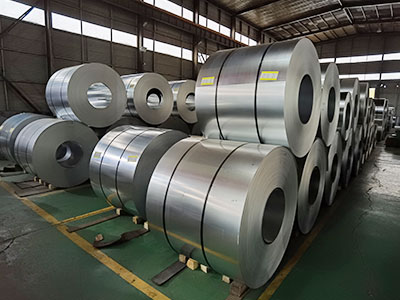
Galvanized coil is a thin steel plate that is immersed in a molten zinc bath so that a layer of zinc adheres to the surface. Galvanized coils can be divided into hot-rolled galvanized coils and cold-rolled hot-dip galvanized coils.
At present, the continuous galvanizing process is mainly used for production, that is, the rolled steel plates are continuously immersed in a plating bath containing molten zinc to make galvanized steel plates. Because galvanized coils have strong corrosion resistance, good surface quality, are conducive to deep processing, and are economical and practical, they are widely used in fields such as construction, home appliances, automobiles, containers, transportation, and household industries. Especially industries such as steel structure construction, automobile manufacturing, and steel warehouse manufacturing. Defects of galvanized coils: Galvanized coils are prone to falling off, scratches, passivation spots, zinc particles, thick edges, air knife streaks, air knife scratches, exposed steel, inclusions, mechanical damage, poor steel base performance, and wavy edges. , warping, different sizes, embossing, different thickness of zinc layer, roller printing and other defects. The main reasons for the peeling off of the zinc layer of galvanized coils are surface oxidation, silicon compounds, cold rolling emulsion too dirty, NOF section oxidation atmosphere and protective gas dew point too high, unreasonable air-fuel ratio, low hydrogen flow, and oxygen penetration into the furnace. The temperature of the strip entering the pot is low, the furnace pressure in the RWP section is low and the furnace door sucks air, the furnace temperature in the NOF section is low, the grease cannot be evaporated, the aluminum content of the zinc pot is low, the unit speed is too fast, the reduction is insufficient, and the zinc liquid The residence time is too short and the coating is too thick.

.png)
.png)
.png)